Films and series set in Sicilia. And which are in Sicilian.
304 films and series set here, 67 with their speech described.
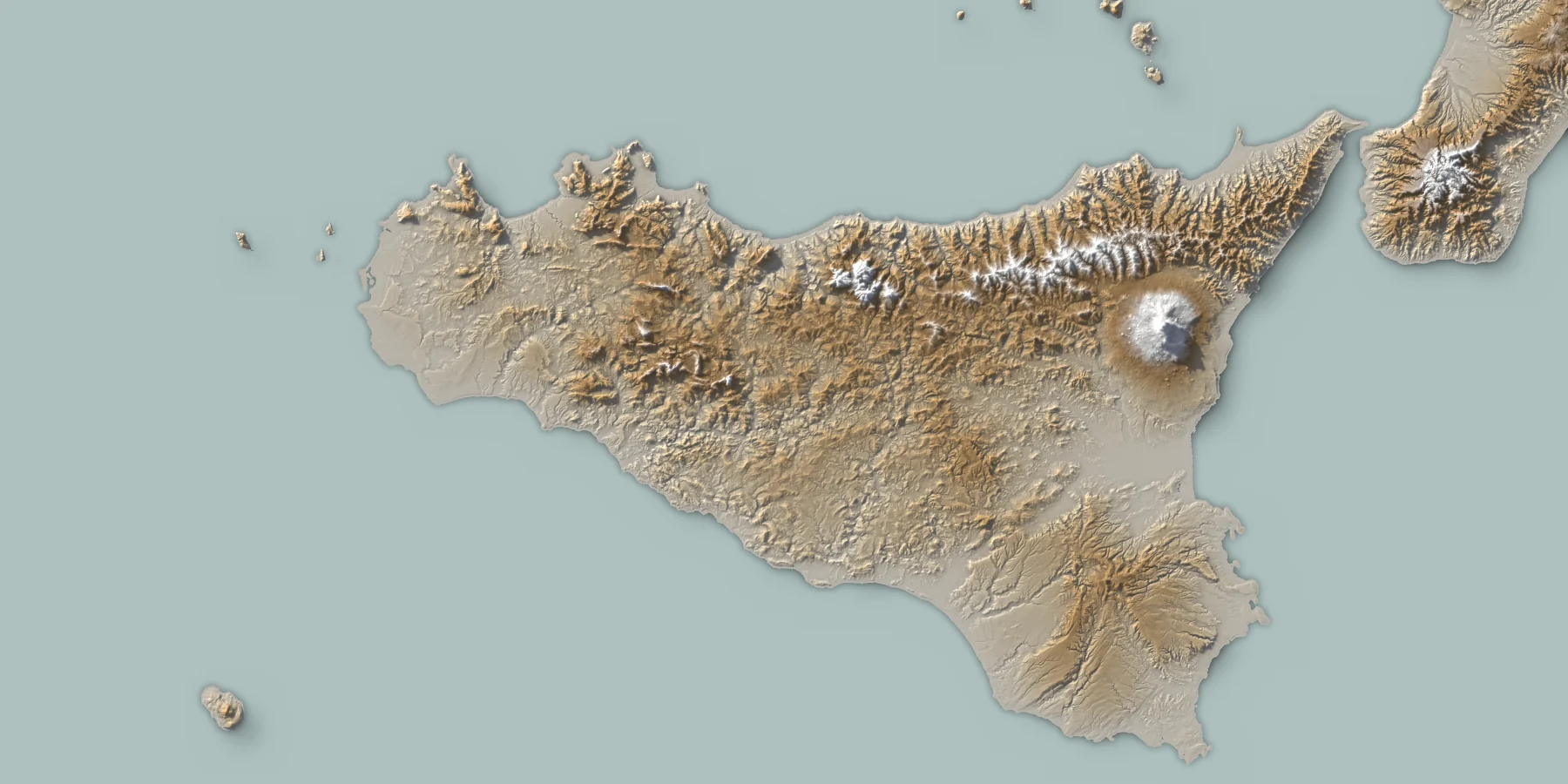
- 304 titles set in Sicilia · click a dot to filter
- 1PalermoIl Gattopardo74
- 2CataniaDivorzio all'italiana25
- 3SiracusaIl garofano rosso3
- 4MessinaNo alla violenza1
- 5Palazzolo AcreideIcam: 300 Giorni1
- 6Priolo GargalloIcam: 300 Giorni1
- 7VizziniMastro Don Gesualdo1
Relief: Copernicus EU-DEM (modified; not endorsed by the European Union) and ETOPO1. Boundaries: Natural Earth. Settings: Wikidata and Italian and English Wikipedia (CC BY-SA 4.0). Sources
One title is set in more than one town here and appears under each pill it belongs to, so the pills above total 305 against Everywhere's 304.
The figure is an average per day across the five years to July 2026. Lookups — not viewings, not ticket sales, not streams.
Set here, not shot here. A title is on this page because its record says the story takes place in this region. Where the camera stood is a fact about a production, not about the work, and counting it moves 80 titles onto pages they have nothing to do with.
- #1788avg. daily Wikipedia article visits
Stated languages: francese, italiano, latino, tedesco
Set among Sicilian aristocracy but written and performed in literary standard Italian; regional flavour is mostly accent and a light dusting of local colour in servants' and villagers' lines, and the post-sync dubbing further flattens it.
Delivery is slow, declamatory and one speaker at a time, with the dubbed track giving unusually clean separation and few overlaps outside the crowd scenes.
- #2594avg. daily Wikipedia article visits
The Giancaldo villagers speak Italian bent hard toward Sicilian — local lexicon, interjections and intonation — but the grammar stays broadly standard and the plot-carrying exchanges between Totò and Alfredo remain followable; only some crowd and market lines tip further.
Normal conversational speed in the two-handers, with bursts of overlapping shouting in the cinema audience and piazza scenes.
- #3588avg. daily Wikipedia article visits
Stated languages: italiano, siciliano
Almost everyone speaks a Sicilianised Italian rather than standard: Montalbano's team, witnesses, housekeepers and old villagers use Sicilian lexicon and sentence shapes, and some minor characters drop far enough into dialect that a learner trained on standard Italian will lose whole lines even though the plot stays followable.
Montalbano himself speaks deliberately and lets pauses sit, but the station scenes and family witnesses talk at normal brisk Italian speed with cross-talk and interruption, so the average is ordinary rather than fast.
- #4549avg. daily Wikipedia article visits
Set in Palermo and acted largely by Sicilian performers, but the speech is standard Italian with Sicilian accent and only occasional local colour from minor characters; no shift out of standard Italian.
Normal conversational pace with clean, deliberately intelligible primetime delivery and little genuine cross-talk; one lead's non-native accent is slower still.
- #5489avg. daily Wikipedia article visits
The Corleonesi and their families speak strongly Sicilian-marked Italian with dialect lexicon and interjections thrown in, but the grammar stays standard and the series was written for a national broadcast audience, so a learner loses individual words rather than whole scenes.
Normal conversational speed with some overlap in family and gang scenes, and Riina's own delivery is deliberately slow and low.
- #6488avg. daily Wikipedia article visits
Stated languages: arabo, francese, inglese, italiano, wolof
The little Italian that is heard — the sea-rescue radio exchange near the end — is plain unaccented standard Italian, with no regional colouring anywhere.
What Italian there is comes as short, deliberately clear radio and shipboard calls, unhurried and one speaker at a time, since they must be understood across a distance.
- #7423avg. daily Wikipedia article visits
Stated languages: italiano, siciliano
The Florios and the Palermo merchant world speak standard Italian with heavy Sicilian and Bagnara-Calabrian colouring — regional lexicon and interjections surface constantly, but the grammar stays standard and lines remain followable.
Normal conversational rate with some overlap in family and market scenes; the period-drama delivery keeps most exchanges measured and one speaker at a time.
- #8414avg. daily Wikipedia article visits
Prime-time RAI Italian throughout with strong Sicilian marking from the local characters — Piccionello above all — whose lexicon, interjections and cadence are regional while the grammar stays standard and followable.
Normal conversational speed with some overlap in the comic double-act exchanges; nothing sustained at interruption pace.
- #9406avg. daily Wikipedia article visits
The Carati family and nearly everyone around them speak standard Italian with Roman and other regional accents; Sicilian and Turin-immigrant characters add local colour without shifting the speech out of standard grammar and lexicon.
Normal Italian conversational speed, with overlapping voices mainly in the crowded family scenes and political meetings; the many two-handers are delivered unhurriedly.
- #10390avg. daily Wikipedia article visits
Palermo setting gives strong Sicilian accent and scattered regional lexicon in the mouths of the mafia families and street informants, but the grammar stays standard and the police-side dialogue is fully standard Italian.
Normal conversational speed with some overlap in the squad-room and family scenes; confrontations raise volume more than they raise rate.
Darker means more titles set there.
- Lazio1,228 titles
- Campania516 titles
- Lombardia422 titles
- Sicilia304 titles
- Toscana235 titles
- Emilia-Romagna186 titles
- Piemonte173 titles
- Veneto168 titles
- Puglia105 titles
- Liguria83 titles
- Sardegna53 titles
- Abruzzo43 titles
- Calabria43 titles
- Friuli-Venezia Giulia42 titles
- Umbria42 titles
- Marche36 titles
- Basilicata27 titles
- Trentino-Alto Adige27 titles
- Valle d'Aosta9 titles
- Molise5 titles
Catalogue information may be incomplete. Sources and methodology
42 of the 66 described here are in Sicilian. Start with Il Gattopardo and leave those until last.
Take the quizSicilian is a separate language, not an accent. Free vocabulary quiz. No signup required.