Films and series set in Toscana. And which are in Tuscan.
235 films and series set here, 50 with their speech described.
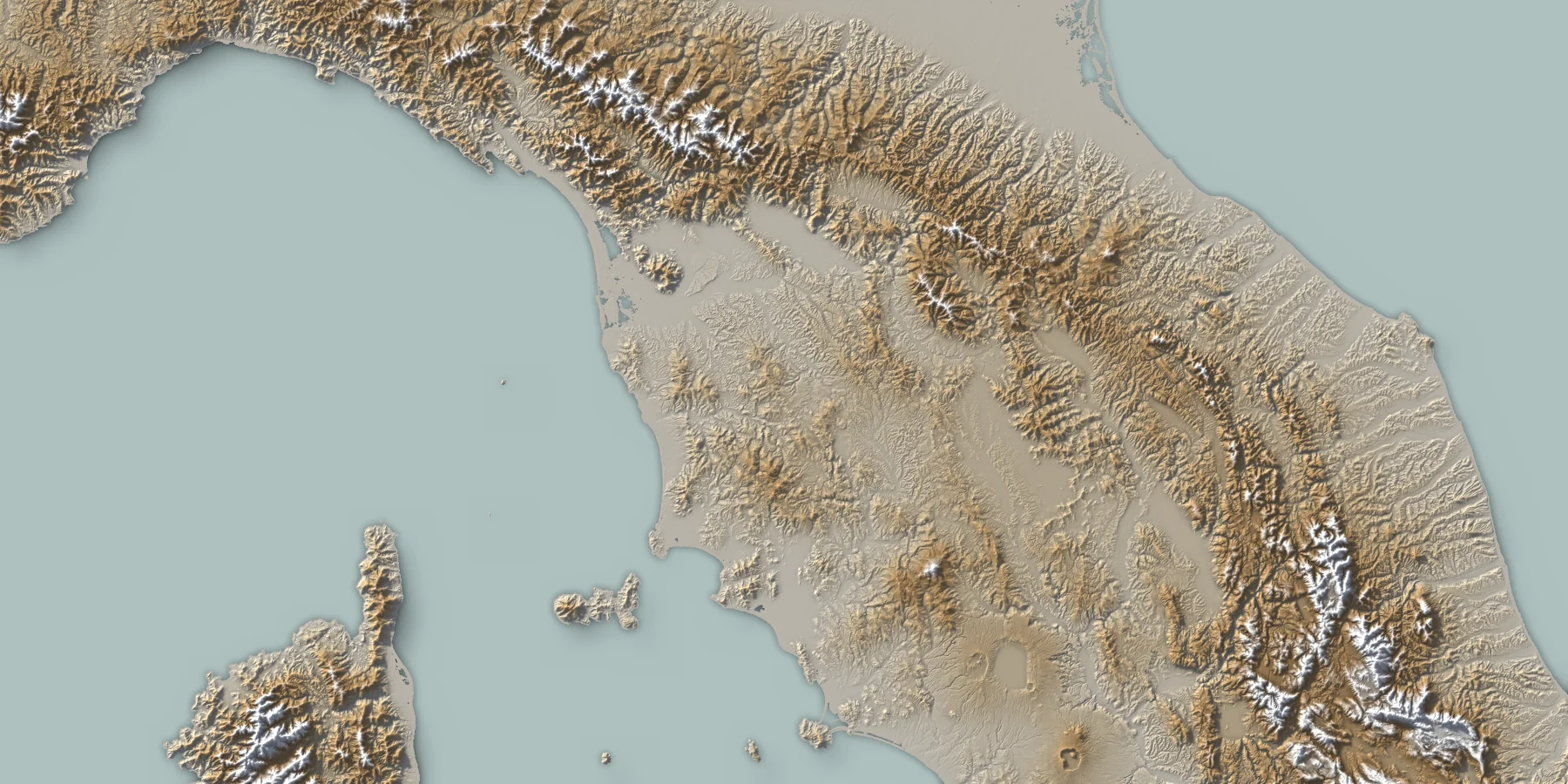
- 235 titles set in Toscana · click a dot to filter
- 1FirenzeAmici miei73
- 2LivornoOvosodo15
- 3PisaAmici miei - Atto IIº10
- 4SienaSei nell'anima9
- 5GrossetoPierino colpisce ancora8
- 6Isola di MontecristoIl conte di Montecristo4
- 7LuccaFinalmente la felicità3
- 8ArezzoLa vita è bella2
- 9PratoMadonna che silenzio c'è stasera2
- 10Bagno VignoniNostalghia1
- 11Castiglione della PescaiaManuale d'amore 31
- 12FollonicaQuesto mondo è per te1
- 13Isola d'ElbaN (Io e Napoleone)1
- 14MaremmaDomani accadrà1
- 15PiombinoAcciaio1
- 16RiparbellaLa chimera1
Relief: Copernicus EU-DEM (modified; not endorsed by the European Union) and ETOPO1. Boundaries: Natural Earth. Settings: Wikidata and Italian and English Wikipedia (CC BY-SA 4.0). Sources
Seven titles are set in more than one town here and appear under each pill they belong to, so the pills above total 244 against Everywhere's 235.
The figure is an average per day across the five years to July 2026. Lookups — not viewings, not ticket sales, not streams.
Set here, not shot here. A title is on this page because its record says the story takes place in this region. Where the camera stood is a fact about a production, not about the work, and counting it moves 80 titles onto pages they have nothing to do with.
- #11,389avg. daily Wikipedia article visits
The four old men at the bar and most of the townspeople speak strongly Livornese-inflected Tuscan — local lexicon, local exclamations and aspirated Tuscan consonants — over what is still standard grammar, so a learner follows the sense but loses the flavour and the odd punchline.
The comic engine is four men interrupting each other at speed, with Massimo's exasperated interjections cutting across them.
- #2644avg. daily Wikipedia article visits
Stated languages: inglese, italiano, tedesco
Benigni and the Arezzo characters speak standard Italian with a marked Tuscan accent and light Tuscan colouring; grammar and lexicon stay standard throughout, and the camp scenes add German rather than dialect.
Benigni delivers at a rapid, comic clip with frequent self-interruption and people talking across each other, and the German-officer scenes layer shouted orders under his running improvisation.
- #3430avg. daily Wikipedia article visits
The five friends speak Florentine-inflected Italian throughout — standard grammar but a steady load of Tuscan lexical choices, discourse particles and local aspirated consonants, so a learner follows the sense while losing colour.
Group scenes run on fast Tuscan cross-talk with constant interruption, and several set pieces depend on characters barrelling through invented patter faster than their victims can object.
- #4406avg. daily Wikipedia article visits
The Carati family and nearly everyone around them speak standard Italian with Roman and other regional accents; Sicilian and Turin-immigrant characters add local colour without shifting the speech out of standard grammar and lexicon.
Normal Italian conversational speed, with overlapping voices mainly in the crowded family scenes and political meetings; the many two-handers are delivered unhurriedly.
Also set elsewhere — the description covers the whole title.
- #5351avg. daily Wikipedia article visits
Standard broadcast Italian throughout, with light central-Italian accent colour and the odd regional turn from the town's civilian characters.
Normal conversational pace with clear television diction; overlap is limited and mostly confined to the lighter ensemble scenes.
- #6324avg. daily Wikipedia article visits
Speech is standard Italian throughout with Florentine/Tuscan colouring in accent and a light regional turn of phrase in the family scenes; no shift out of standard Italian.
Normal adult conversational pace with some overlap in the family arguments, but most exchanges are two-handers delivered at a followable speed.
- #7316avg. daily Wikipedia article visits
The Tuscan/Florentine characters speak with heavy local colouring — aspirated consonants, local turns of phrase and vernacular fillers — but the grammar stays standard Italian, so lines are followable rather than lost.
Tuscan comic banter runs fast, with family and group scenes full of interruption and people talking over one another.
- #8316avg. daily Wikipedia article visits
Stated languages: italiano, lingua napoletana
Troisi speaks Italian pulled hard toward Neapolitan in lexicon, syntax and cadence while Benigni's is Tuscan-coloured; the grammar stays broadly standard but a learner loses phrases in the improvised exchanges.
Fast overlapping comic cross-talk, and Troisi's swallowed, half-muttered delivery makes the effective rate harder than the words alone would suggest.
- #9306avg. daily Wikipedia article visits
Everyone speaks standard Italian, but the Roman friends carry audible Roman colouring and the northern family a Milanese inflection, which stays at the level of accent and a few local turns of phrase rather than a separate grammar.
Comic delivery is quick, and the ensemble scenes with the young men talking over each other bring frequent interruption and cross-talk.
- #10278avg. daily Wikipedia article visits
The cast speaks a rustic Tuscan-coloured Italian, with several supporting and animal characters voiced in markedly southern accents, but the grammar stays standard and the regional element is lexical and phonetic rather than a separate language.
Ordinary conversational speed for most scenes, quickened by the fast comic patter and interruption of the fox-and-cat pair and by the crowd noise at the puppet theatre.
Darker means more titles set there.
- Lazio1,228 titles
- Campania516 titles
- Lombardia422 titles
- Sicilia304 titles
- Toscana235 titles
- Emilia-Romagna186 titles
- Piemonte173 titles
- Veneto168 titles
- Puglia105 titles
- Liguria83 titles
- Sardegna53 titles
- Abruzzo43 titles
- Calabria43 titles
- Friuli-Venezia Giulia42 titles
- Umbria42 titles
- Marche36 titles
- Basilicata27 titles
- Trentino-Alto Adige27 titles
- Valle d'Aosta9 titles
- Molise5 titles
Catalogue information may be incomplete. Sources and methodology
17 of the 47 described here are in Tuscan. Start with La vita è bella and leave those until last.
Take the quizTuscan is a way of speaking Italian, not a separate language. Free vocabulary quiz. No signup required.