Films and series set in Trentino-Alto Adige. And what the Italian sounds like.
27 films and series set here, 9 with their speech described.
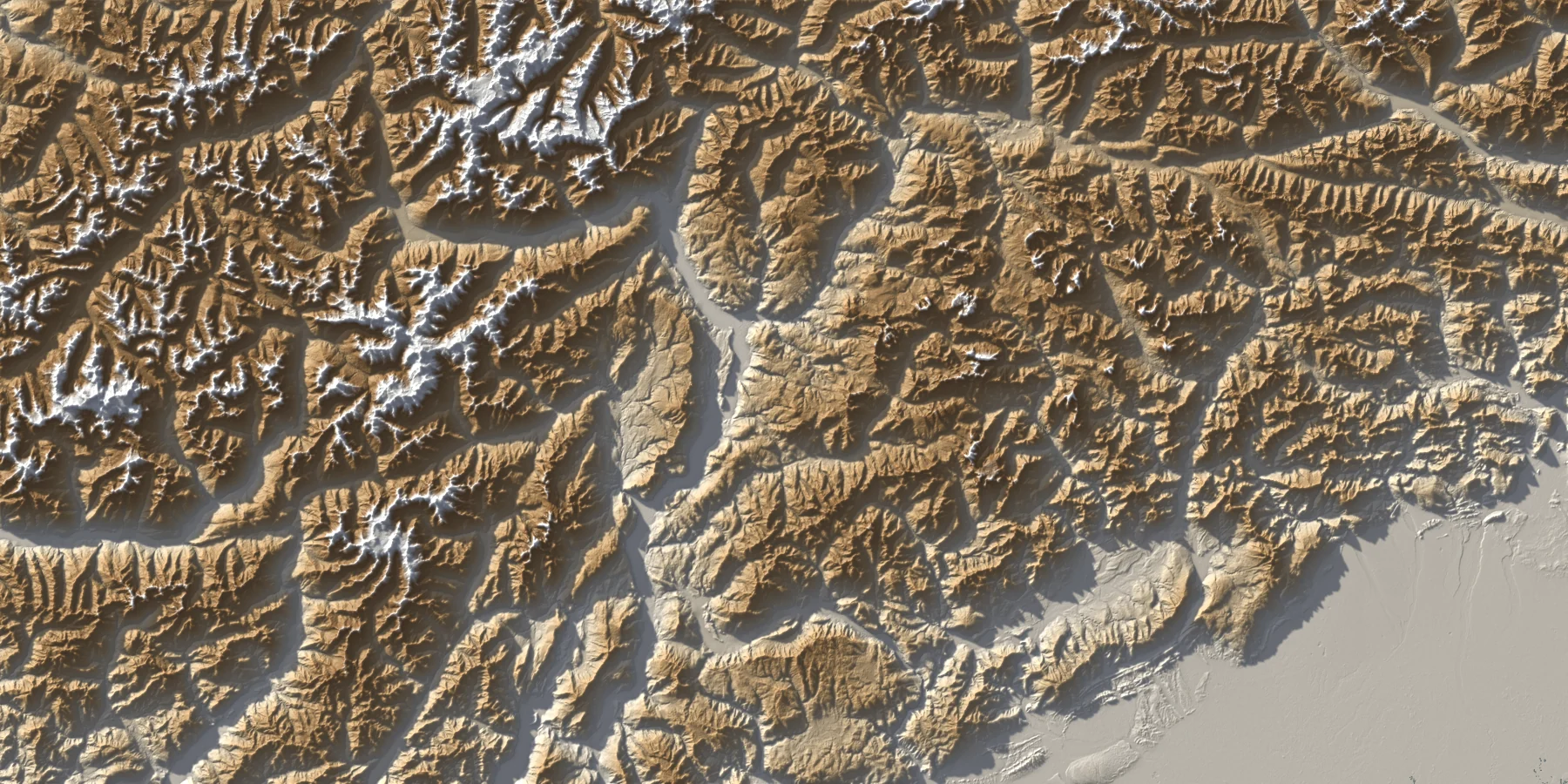
- 27 titles set in Trentino-Alto Adige · click a dot to filter
- 1TrentoVermiglio2
- 2Campo TuresLe ali della vita1
- 3Curon VenostaCuron1
Relief: Copernicus EU-DEM (modified; not endorsed by the European Union) and ETOPO1. Boundaries: Natural Earth. Settings: Wikidata and Italian and English Wikipedia (CC BY-SA 4.0). Sources
The figure is an average per day across the five years to July 2026. Lookups — not viewings, not ticket sales, not streams.
Set here, not shot here. A title is on this page because its record says the story takes place in this region. Where the camera stood is a fact about a production, not about the work, and counting it moves 80 titles onto pages they have nothing to do with.
- #1837avg. daily Wikipedia article visits
Stated languages: inglese, italiano, lingua napoletana
Most of the film is standard Italian with a Neapolitan accent, but several Naples-set scenes — the camorra household, street and family exchanges — shift into genuinely Neapolitan lexicon and turns of phrase that a learner will lose in patches.
Lines are delivered slowly and with weight, one speaker at a time, with pauses built into the performances; overlap is rare outside a few family scenes.
The description names somewhere else, and we have not established which is right.
- #2798avg. daily Wikipedia article visits
Rai prime-time fiction shot in the Dolomites: everyone speaks standard Italian, with at most a light northern colouring on some local minor characters and occasional German/Ladin place-names in the mountain setting.
Normal conversational pace with clean, well-articulated network delivery; family scenes bring some overlap but interruption is not the house style.
- #3289avg. daily Wikipedia article visits
The mountain family and the villagers speak the local Trentino dialect of the Val di Sole among themselves, and the film was released in Italy with Italian subtitles for those passages, while the schoolmaster father and the classroom scenes carry standard Italian.
Delivery is slow and deliberate, with people speaking one at a time; only the crowded family table brings brief overlap.
- #4219avg. daily Wikipedia article visits
Rai prime-time period fiction set among northern gentry: everyone speaks clear standard Italian with no regional lexicon, even the servants and villagers.
Rai period house style: deliberate, well-enunciated delivery with dramatic pauses and little genuine overlap, since lines are staged for emphasis rather than naturalistic cross-talk.
- #5173avg. daily Wikipedia article visits
Stated languages: italiano, tedesco
The Italian spoken is standard with a northern colouring; the local linguistic texture of Bolzano comes from German/South Tyrolean rather than from an Italian dialect, so the Italian a learner hears stays unmarked.
Normal conversational pace with some overlap in station and interrogation scenes; the prime-time format keeps delivery clear rather than rapid-fire.
- #6155avg. daily Wikipedia article visits
Set in a fictional Alpine village with a deliberately unplaceable northern setting; the investigators, the media people and the villagers all speak standard Italian, and one major role is dubbed into neutral Italian.
Delivery is measured and deliberate, with the lead speaking in controlled, articulated sentences; overlap occurs mainly in the press-scrum scenes.
- #7103avg. daily Wikipedia article visits
- #891.2avg. daily Wikipedia article visits
Standard Italian throughout, with light Roman colouring in the adult leads' delivery and a few regionally tinged comic asides; no shift out of standard Italian.
Normal conversational pace with bursts of overlap when the group of children argue, but comic timing keeps lines articulated for a family audience.
- #987.1avg. daily Wikipedia article visits
- #1074.2avg. daily Wikipedia article visits
Darker means more titles set there.
- Lazio1,228 titles
- Campania516 titles
- Lombardia422 titles
- Sicilia304 titles
- Toscana235 titles
- Emilia-Romagna186 titles
- Piemonte173 titles
- Veneto168 titles
- Puglia105 titles
- Liguria83 titles
- Sardegna53 titles
- Abruzzo43 titles
- Calabria43 titles
- Friuli-Venezia Giulia42 titles
- Umbria42 titles
- Marche36 titles
- Basilicata27 titles
- Trentino-Alto Adige27 titles
- Valle d'Aosta9 titles
- Molise5 titles
Catalogue information may be incomplete. Sources and methodology
Find your starting point. Estimate your Italian vocabulary.
Take the quizFree vocabulary quiz. No signup required.